
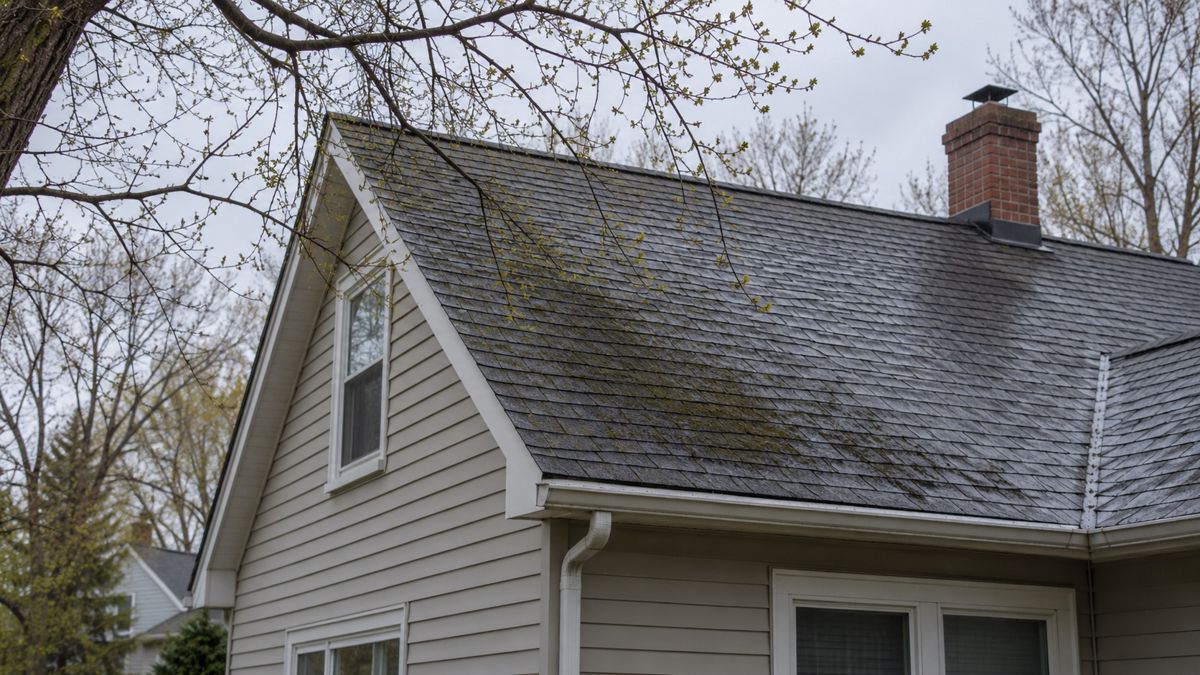
Yes, high pressure power washing can damage asphalt shingles, and it often does. A strong jet can knock off the granules that protect the roof, lift the edges of shingles and drive water into places it should never reach. The damage is not always visible on the day. It tends to show up later as leaks, bald patches and a shorter roof life.
If your roof has dark streaks or moss, you can clean it safely. You just need a different method than the one you use on a driveway. Here is what goes wrong with high pressure, why Green Bay roofs are especially exposed, and what to do instead.
What does high pressure do to asphalt shingles?
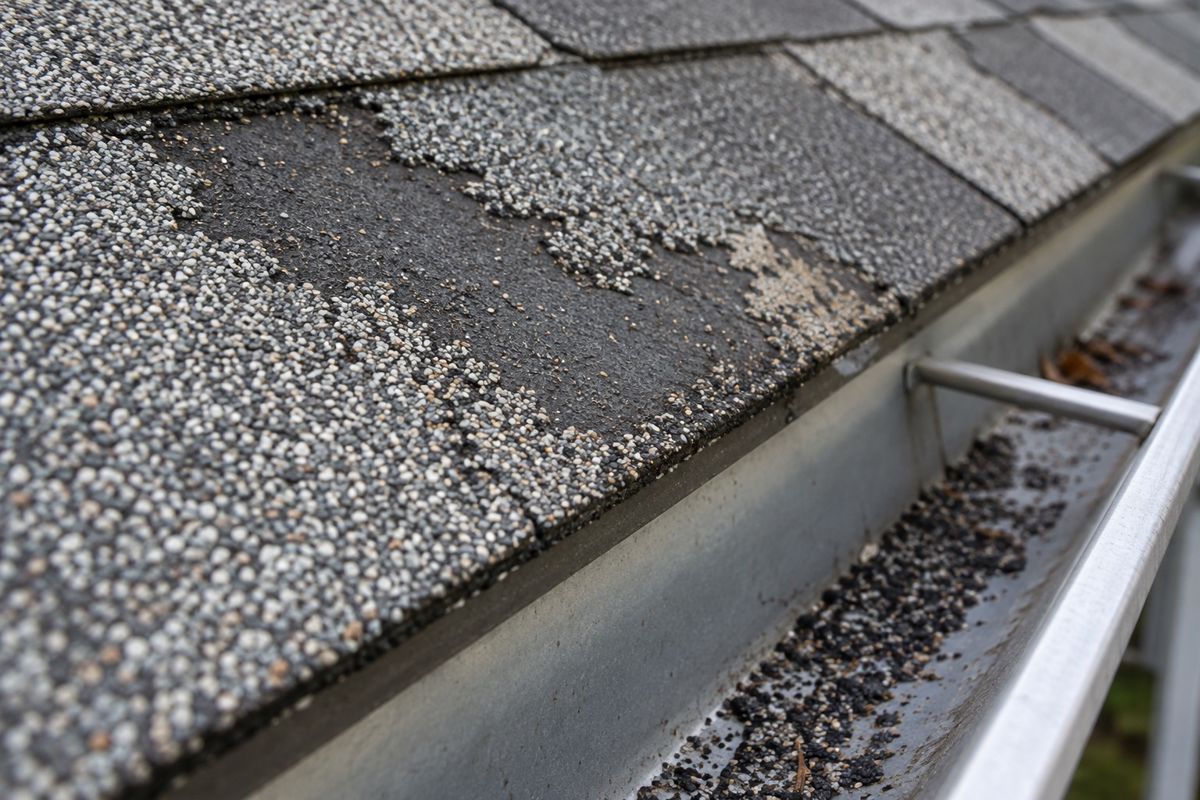
An asphalt shingle is a base mat coated in asphalt and covered with small mineral granules. Those granules are not decoration. They shield the asphalt from sunlight and heat, and they help the roof shed water. When a pressure washer blasts the surface, granules are knocked loose and wash into the gutters.
Once granules are gone, the asphalt underneath is exposed. Sun dries it out faster, and the shingle becomes brittle and starts to crack. You may see dark or shiny patches where the surface is bare. A few lost granules are normal on any roof, but a heavy blast can strip a lot in minutes.
Pressure also affects the shingle itself. A washer commonly runs at a few thousand psi, while a garden hose is only a small fraction of that. Even a narrow fan of water at that force can crease a shingle, scuff the surface or break the seal strip that holds the tab down.
Why does water forced under shingles matter?
Roofs are built to shed water running downhill. They are not built to resist a jet aimed uphill. When a wand is pointed up the slope, water can be forced under the shingle edges, past the nails and into the underlayment. From there it can reach the roof deck and the attic.
The first signs are easy to miss. A faint stain on an upstairs ceiling, damp insulation or a musty smell in the attic can show up days or weeks later. By then it is hard to connect the leak to the wash. Wet decking that stays damp can also grow mold or rot.
Flashing, vents and chimney details are weak spots too. Water pushed against them can get past seals and sealant that were never meant to take that force.
Why are Green Bay roofs more exposed?
Northeast Wisconsin is hard on roofs before any washing happens. Snow sits on the roof for weeks. It melts in sun and refreezes at night, and that cycle can leave ice at the eaves and push water under shingles. Freeze-thaw also makes older shingles stiff and brittle in the cold months.
That wear adds up. A roof that has been through many winters may already have thin granule cover and tired seal strips. Aggressive washing on a roof like that does more harm than it would on a new one. Shaded slopes and spots under trees also tend to stay damp, which is where algae and moss like to grow, so those are the areas people want to clean most.
Washing a roof in cold weather adds other problems. The cleaner works slowly, water can freeze on the roof and the surface becomes dangerous to stand on. Spring through early fall is the sensible window.
What do shingle makers and roofers say?
Many shingle manufacturers advise against pressure washing. Some state in their care guides that it can damage the product and may affect warranty coverage. The details differ from one maker to the next, so check the paperwork for your roof or ask the roofer who installed it.
Roofers also tend to warn about the safety side. A wet roof is slick, and a heavy washer wand pushes back on the person holding it. Falls from ladders and roofs are a real risk. For most homeowners, it is safer to leave roof work to a crew with the proper gear.
What is soft washing, and how is it different?
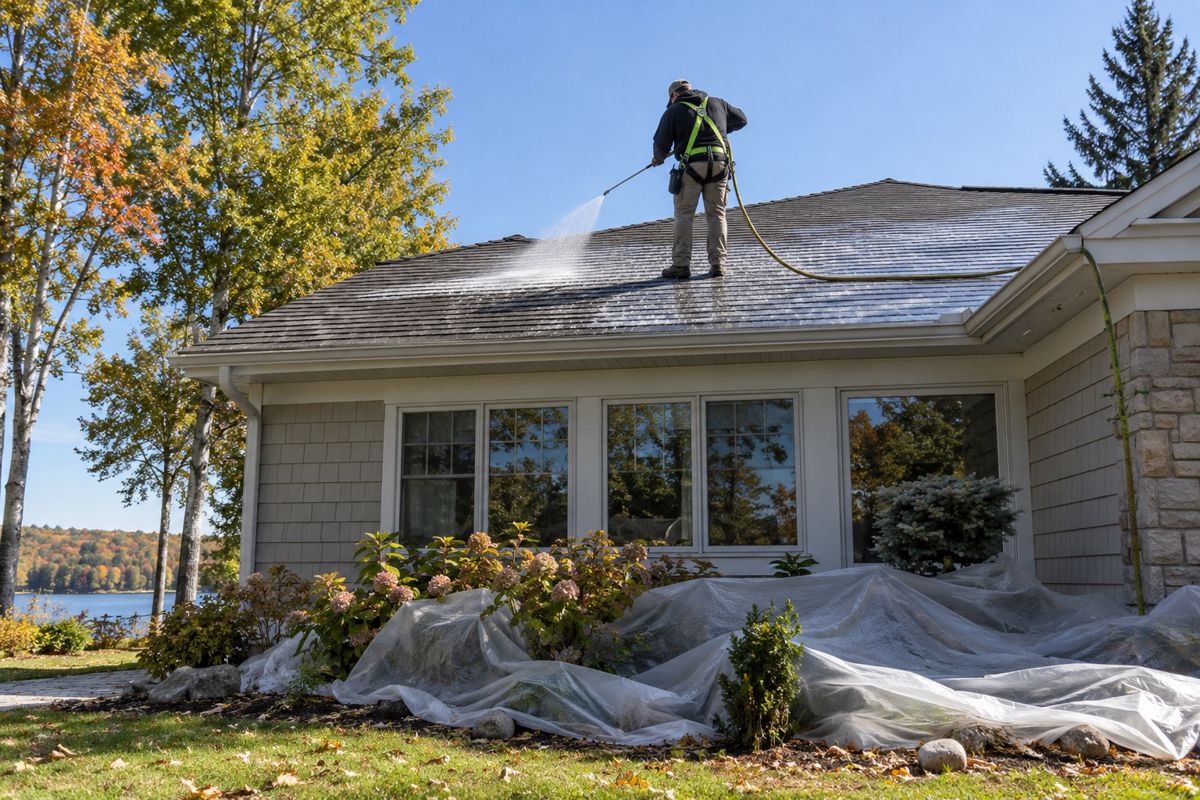
Soft washing cleans with chemistry instead of force. A cleaning solution is applied at low pressure, similar to a strong hose. It is left to work for a short time, which kills algae and loosens moss and lichen. Then the roof is rinsed carefully.
The differences are easy to list:
- Pressure: low, so granules stay in place and edges stay down.
- Direction: water runs with the slope, not up under the shingles.
- Contact: little or no scrubbing of the surface.
- Protection: plants are wet before and after, and runoff is kept away from beds and siding.
Results can be gradual. Much of the staining comes off right away, and some fades over days or weeks as rain rinses the dead algae away. Thick moss may need more than one pass.
How can you tell if your roof is safe to clean?
Cleaning is for roofs in decent shape. Take a look from the ground, with binoculars if you have them, and go through this short list:
- Check for curled, cracked or missing shingles.
- Look in the gutters for large amounts of granules.
- Notice any bald or shiny patches on the slopes.
- Think about the roof age and whether a roofer has recently looked at it.
- Check for loose flashing, damaged vents or soft spots near the eaves.
If you see several of these, speak with a roofer before you clean. A roof near the end of its life will not be saved by washing, and washing may speed up the decline. If the roof looks sound and the streaks are the only issue, a soft wash is a reasonable next step.
What should you do next?
Skip the rented pressure washer for the roof. If you want it cleaned, find a crew that uses a low-pressure soft wash, and ask them plainly how they protect the granules and where the water goes. Ask to see proof of insurance, and get the quote in writing.
For a closer look at how the work goes, what changes the price and when to book, see our page on roof cleaning in Green Bay.